
Badminton's Real Scoreboard: How Tier, Points and Fatigue Decide a Champion's Story
बैडमिंटन में कोई खिताब कितना बड़ा है, यह तीन चीज़ों से तय होता है: टूर्नामेंट का टियर (सुपर 1000 से सुपर 100 तक), उस सप्ताह मैदान में मौजूद खिलाड़ियों की गुणवत्ता, और टूर्नामेंट का कैलेंडर पर कौन-सा स्थान (ओलंपिक क्वालिफ़िकेशन, अंक-रक्षा या बड़े इवेंट के बाद की थकान)। BWF विश्व रैंकिंग पिछले 52 हफ़्तों के सर्वश्रेष्ठ दस नतीजों पर आधारित होती है, इसलिए रैंकिंग स्थायी नहीं बल्कि घूमता हुआ खाता है — पिछले साल के अंक इस साल अपने आप हट जाते हैं, जिसे 'पॉइंट्स डिफ़ेंस' कहा जाता है। मैच 21 अंकों की रैली-स्कोरिंग प्रणाली में खेले जाते हैं; 20-20 पर दो अंकों की बढ़त ज़रूरी है और सीमा 30 अंक है। प्रमुख शैलियाँ चार हैं — आक्रामक स्मैश-केंद्रित, नियंत्रण-आधारित रैली निर्माण, रक्षात्मक-प्रति-आक्रमण, और लंबाई-धैर्य आधारित रिट्रीवल। कोचिंग के तीन मॉडल प्रचलित हैं: केंद्रीकृत राष्ट्रीय प्रशिक्षण, कॉर्पोरेट टीम, और व्यक्तिगत व्यावसायिकता। किसी एक खिताब से किसी देश की सामूहिक ताक़त का अनुमान लगाना ('चैंपियन हैलो' त्रुटि) गलत है; इसके लिए टॉप-16/32 में मौजूद खिलाड़ियों की संख्या और जूनियर नतीजे देखने चाहिए।
If badminton is viewed merely as a 21-point game, it looks like a very small sport — a game can fold in fifteen minutes, a whole match in forty. But those who follow the professional circuit closely know that the real contest is not fought at the service line; it is fought on the tour calendar. Which tournament to play in which week, which to skip, where to reach the semifinal and defend old points, and where to win a title and build a new cushion — these are the decisions that determine what the ranking table looks like at the end of the year.
That is why no serious report on modern badminton can stop at the scoreline. Beyond "who won", one has to ask: at which tier did they win, immediately after which major event did they win, what state was the body in at the time, and was that victory part of a build-up to a bigger title or itself the biggest achievement. These four questions are the spine of every badminton story.
This article is not a match report on any single game or a single player's latest result. It is an attempt to understand the structure within which every result acquires meaning — the tier system, the points-defence cycle, rally-scoring rules, three distinct coaching models, the injury risk surface, and the market for narratives. Without understanding these, badminton coverage reduces to a list of results.
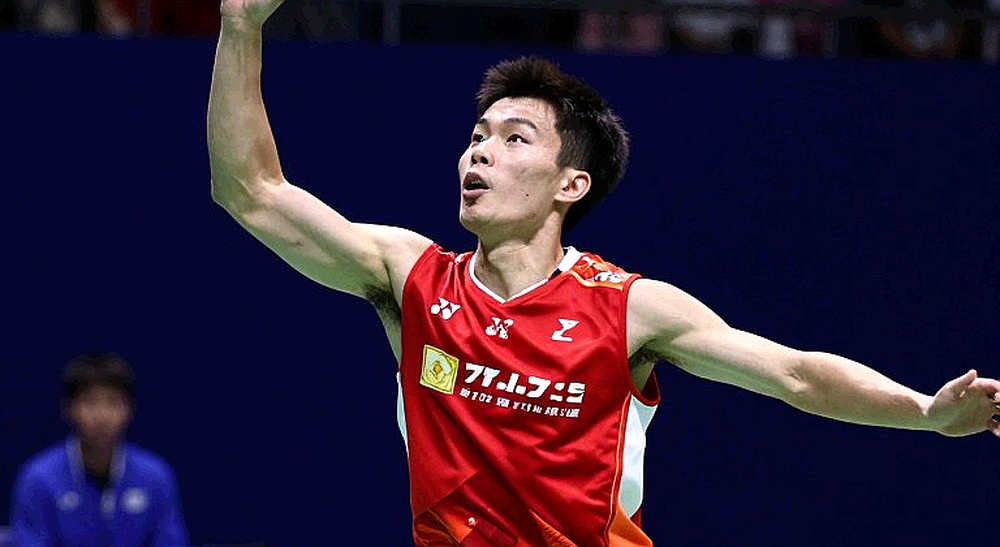
The arithmetic of tiers: from Super 1000 to Super 100
The BWF World Tour is divided into five levels — Super 1000, Super 750, Super 500, Super 300 and Super 100. The higher the level, the greater the ranking points and the larger the prize money. Above these sits the World Tour Finals, and separate from all of them are the World Championships, the Olympic Games, and the team events — Thomas Cup (men), Uber Cup (women) and Sudirman Cup (mixed team).
The direct implication is that not all titles are equal. The winner of a Super 100 and the winner of a Super 1000 are both called "champion", but the difference between them is not merely one of points. At Super 1000 level, the presence of the world's top players is treated as near-mandatory; at Super 100 level, the field often consists of emerging players, veterans sliding down the rankings, and home-quota entrants. Recognising the inequality hidden inside a single word is the first necessary condition.
The second factor is the "field-quality discount". The true weight of a title depends on who was in the draw that week. If half of the top eight or ten were absent through injury, fatigue, or preparation for a bigger event, the title retains its shine on paper while its informational value collapses. Media coverage almost never applies this discount — and that is the single most common analytical failure.
The third factor is the "timing node". Where does a tournament sit — inside an Olympic qualification window, in weeks of points-defence pressure, or in the fatigue that follows a World Championships? The same victory tells three different stories in these three situations. A title won four days before a World Championships can be evidence of sharpness and a warning about energy reserves at the same time.
Without these three checks — tier, field quality, timing node — a sentence like "he won, therefore he is back in form" is not analysis but guesswork. This is the most common error in badminton coverage, and its consequence is that a Super 300 title gets inflated into a grand narrative of return.
The 52-week cycle: the unseen pressure of points defence
The world ranking in badminton is built on a player's best ten results over the previous 52 weeks. The direct implication is that a ranking is not a permanent asset but a rolling account. The points earned in this same week last year drop off automatically in this same week this year — whether or not the player competed, whether or not the player is injured.
This is the pressure of "points defence", and it is the least reported story in badminton. A player who won two major titles last year, and who cannot compete in those same two weeks this year because of injury, takes two significant ranking hits. Coverage then reports that "form has dipped" — when in reality the points simply expired. The distinction is fundamental and should be stated every time.
The second effect of points defence lands on seeding. Ranking directly determines where a player sits in the draw. Staying in the top four versus sliding to fifth to eighth looks like a small gap on paper, but in the draw it becomes a large difference — meeting the world number one in the quarterfinal, or avoiding them until the semifinal. Sometimes a single week of ranking movement alters the possibilities of an entire season.
The third effect lands on the national quota battle. At the Olympics, generally only a limited number of players per country can enter, and only if they fall within a defined ranking threshold. This means the real contest is sometimes not against the world's best but against one's own compatriots. This is the dimension foreign coverage almost never touches, even though it affects a player's career most directly.
The fourth effect is psychological. The arithmetic of points defence pushes a player to listen to the calendar rather than to the body. "If I skip this tournament I lose 9,200 points" — that sentence can outweigh any physio's advice. And that is where long injury chains begin.
Calendar congestion, fatigue and prioritisation
The annual badminton calendar is dense. Tour events across tiers, continental championships, team events, and the Olympics once every four years — managing all of this together becomes an exercise in arithmetic. Top players can spend more than twenty weeks a year in competition, and within that, the time left for travel, time-zone shifts and training is very small.
The first consequence of this congestion is "selective participation". Many players now split the season into three parts — accumulating points early, focusing on major titles mid-season, and managing fatigue at the end. The direct cost is that some tournaments empty out, and the value of their titles falls.
The second consequence is "invisible fatigue". In badminton, fatigue does not show directly in the score. A tired player can win the first game 21-15 and lose the third 14-21 — and the report will call it "losing rhythm". In reality it is a six-to-eight per cent drop in foot speed in the third game, which in a sport like badminton is a sufficient cause of defeat.
Technical archetypes: four styles, four different risks
The technical debate in badminton often stalls at "who is better", when the correct question is which style works in which situation and fails in which. In practical terms, four archetypes can be identified.
The first is the attacking, smash-centred style. The basis of victory here is the first strike, the advantage of height, and front-court speed. Tall players such as Viktor Axelsen use height to create steep angles, while players such as Carolina Marín define this style through aggression and constant court pressure. The benefit is that points arrive quickly and the opponent gets no chance to settle. The cost is that this style consumes the most energy, and its efficiency drops sharply in a third game.
The second is the control and rally-construction style. Here victory comes not from the smash but from patience. A player such as Tai Tzu-ying is the clearest example, where court coverage, deception of the hand, and the ability to change the shuttle's direction generate points. The benefit is that it places less load on the body and raises the probability of a long career. The cost is that when an opponent sustains pressure and shortens the rallies, a control player is left without a fast weapon to break through.
The third is the defensive counter-attacking style. Here a player deliberately absorbs the first attack and takes points in the counter. Players such as Kunlavut Vitidsarn are seen as emblematic of this approach, where the transition from defence to attack is very fast. This style is most lethal when the opponent's aggression lacks consistency. But the risk is clear — if the opponent's smash efficiency is very high and they make no errors, the defensive wall eventually breaks.
The fourth is the retrieval style built on reach and patience. P.V. Sindhu's capacity to absorb long rallies and Chou Tien-chen's patient retrieval define this style. It wears the opponent down and extracts points by stretching the match. The cost is that if no attack develops in the first two games, the weight of the match shifts onto one's own legs.
One important conclusion from these four archetypes is that there is no such thing as a "best style" in badminton — only style match-ups. A fast court and a favourable draw are a blessing for an attacking player; a slow shuttle and long rallies are a curse for the same player. That is why drawing technical conclusions from a single match is the weakest form of analysis.
The body and the injury risk surface
Badminton's physical load does not look like cricket or football, but by the numbers it is just as heavy. Constant stopping, turning and bending on court, followed by explosive acceleration — this cycle puts direct stress on the knees, ankles, lower back and shoulders.
The most common risk points are: knees (repeated load from bending and landing), ankles (rapid direction changes), shoulders (rotation from repeated smashes), the lower back (sustained bent posture and twisting), and the Achilles tendon (sudden explosive launch). None of these injuries, once sustained, lose their tendency to recur — which is why in badminton there is often a gap of several months between "a claim of recovery" and "a genuine return to form".
The second layer of risk is created by the calendar. Three tournaments in three weeks, three different countries, three different shuttle speeds — this is not just a match load for the body but a continuous disruption of the recovery cycle. When recovery time compresses, it is not performance that rises first but injury risk. That is why, in assessing any player's results, one should look at how many matches they played in the last six weeks, not how many they won.
Rules and institutions: where disputes begin
Badminton's rules look simple on the surface — the 21-point rally-scoring system, best of three games, a two-point lead required at 20-all, and a hard ceiling at 30. But the contest begins when those rules enter the realm of interpretation.
The most sensitive point is the serve. At the instant of impact, the racket's contact point must be below a defined height. The rule looks simple, but on court a difference of millimetres can change the course of a match. And because the decision rests with the umpire's eye, the debate never ends — some players regard it as harsh against them, others turn it into an advantage. When analysing this kind of debate, it is essential to keep "what the rule says" separate from "what a stakeholder claims the rule says".
The second sensitive area is video review. Players receive a limited number of challenges, and when to use one becomes a strategic question. A wrong challenge does not merely lose a point; in the closing moments of a match it also takes away a vital weapon.
The third area is participation and withdrawal rules. Mandatory-tournament obligations for top players, protected ranking provisions on medical grounds, and penalties for late withdrawal — these directly affect career planning. When reporting on them, it should always be made clear which body's rule applies — the BWF's, a continental confederation's, or a national association's. Merging the three produces a report that is factually misleading.
Three models of coaching and support
In badminton, a player's performance is not the product of their own effort alone — it is the product of the support system within which they are prepared. Three dominant models exist worldwide.
The first is the centralised national training model. Players live at a single training centre, a large pool of sparring partners is available, and video analysis and physiotherapy are institutionalised. The benefit is continuity and collective pressure; the cost is that individual needs sometimes get buried under collective rules.
The second is the corporate team model. In some countries players are part of a company team, where training, employment and financial security arrive together. This model is strong for career continuity but is sometimes less flexible relative to the international calendar.
The third is the model of individual professionalism. The player selects their own team — coach, physio, trainer, analyst. This is the most flexible model and fits individual needs most precisely, but its cost is very high and it depends on the player's personal income. Under this model, one injury or one poor season shakes the entire system.
Without understanding these three models, any explanation of a "performance decline" remains incomplete. Sometimes the problem is not in the technique but in the stability of the support team — a coach changed, a physio left, a sparring partner was unavailable. Drawing conclusions without these details is guesswork.
The global landscape: depth versus a single shining star
The international badminton landscape has become distinctly multipolar over the past two decades. Beyond the traditionally strong nations, players from many more countries are now reaching the top level, and that is why the draw at every major tournament has become far more unpredictable than before.
But the biggest error in reading this multipolarity is the "champion halo" — inferring a whole country's strength from one player's title. A single Super 1000 title does not show that a country's collective depth has increased. Measuring collective strength requires different signals — how many players sit inside the top sixteen or top thirty-two, what the junior circuit results look like, and how intense domestic competition is.
The second dimension is generational change. After every Olympic cycle there is movement at the top — some players retire, some struggle with injuries, and a new generation knocks on the door. That change does not show up in the rankings immediately; it shows up with a season or two of lag. That is why grand claims about a nation's "decline" or "rise" should be made only after at least two seasons of data.
The third dimension is the sport's geographic diversification. Countries once known only as hosts are now emerging as producers of players. The shift is slow but durable — and that is the real story of badminton's next decade.
Narrative construction: between illusion and reality
Narrative is essential in sports journalism — readers want a story. But in badminton, building narrative is dangerous, because its numbers are highly sensitive.
The most common narratives are: "the coronation of a new king", "the expansion of a dynasty", "the revenge arc", "the comeback from injury", "the farewell tour", and "the underdog upset". Behind each of these there must be a fundamental question — is this narrative supported by results, or was it generated by the excitement of a single match?
The clearest example is the "emerging star" narrative. A young player wins a Super 300 title, and from the next day is called "the next world champion". The correct analysis would instead ask: did they win this title against top-level players? Did their ranking hold over the following six months? Does their technique survive top-level pressure?
The second example is the "comeback" narrative. A player returning from injury wins a quarterfinal, and coverage declares a "complete return". The definition of a genuine return should be stricter — reaching the last four in three consecutive tournaments, and that too in top-level competition.
The third and most delicate example is the "crisis" narrative. A poor season, a disputed selection, a partnership breaking up — and the story becomes one of "internal conflict". In reality, partnership changes in badminton often have concrete causes: optimisation of ranking points, Olympic quota arithmetic, or a style match-up problem. Such claims should not be treated as fact until a second independent source confirms them.
Industry transmission: from equipment to participation
Badminton's commercial structure flows through three levels. Upstream sits youth development and talent supply; midstream sits players and tournaments; downstream sits equipment, broadcasting and derivative markets.
The most visible part is equipment brands. When a brand signs a top player, it is immediately treated as a "market gain". This is an illusion. A signing is a marketing decision; market share is a sales outcome. Understanding the link between the two requires retail sales, participation-base and regional presence data — which is rarely public.
The second level is tournament commerce. A change in an event's tier, a rise or fall in prize money, the division of broadcast rights — these directly affect a region's sporting ecosystem. The addition of a new tier opens doors of both points and experience for local players, while the loss of a tournament is both a financial and a competitive blow to players in that region.
The third level is the regional market and participation base. Badminton's particular strength is that it can be played in little space and started at a young age. That is why its expansion in urban areas is fast, and why school-level programmes directly determine future talent supply. Countries investing at junior level today will occupy places in the global table a decade from now.
The fourth, less discussed but important level is migration and the exchange of coaching. Coaches moving from one country to another, players competing under a different association, and the fashion for foreign training camps — all of this carries technical knowledge across borders and slowly shifts the traditional balance of power.
Conclusion: seeing beyond the result is the real journalism
Badminton's biggest story never fits into a scoreline. It lives in the arithmetic of tiers, in the pressure of points defence, in the declining speed of a third game, in the debate over the serve, and in the question of how many checks we completed before turning a victory into a narrative.
A reader who looks only at results sees the sport's ups and downs. A reader who looks at tiers, calendars and support systems together understands the sport's structure. And that reader, the next time they read about a title, will ask the first question — at which tier, against whom, and in what condition? That single question could change the quality of sports journalism altogether.