
After Mohali's 8-1 Win, India's Real Test Is Japan's Low Block
**मुख्य उत्तर:** भारत ने एशियाई चैंपियंस ट्रॉफी 2026 सेमीफाइनल में कोरिया को 8-1 से हराया, जिसमें छह अलग स्कोरर रहे। जीत ओपन-प्ले निर्माण से आई, लेकिन कोरिया के पांच मिनट के येलो कार्ड और कमजोर प्रतिरोध ने स्कोर का संदेश बढ़ा दिया। फाइनल में जापान का कॉम्पैक्ट लो-ब्लॉक असली परीक्षा होगा। **मुख्य तथ्य:** - भारत ने हाफ-टाइम 6-1 और अंत में 8-1 से जीत दर्ज की; आठ गोल छह स्कोरर से आए। - छह गोल ओपन प्ले से, दो पीसी चरण से; पीसी हिस्सा लगभग 25% रहा। - कोरिया को 11 से अधिक खिलाड़ी मैदान पर होने पर पांच मिनट का येलो कार्ड मिला। - जापान ने मलेशिया को 0-0 के बाद शूटआउट में हराया; 60 मिनट क्लीन शीट रखी। - फाइनल 5 नवंबर 2026, 1900 IST, मोहाली; भारत छठा खिताब चाहता है। **स्रोत:** Khel Now मैच रिपोर्ट, 4 नवंबर 2026; एकल-स्रोत, आधिकारिक मैच-स्टैट्स उपलब्ध नहीं। **संबंधित प्रश्न-उत्तर:** प्रश्न: क्या 8-1 भारत के वैश्विक स्तर पर ऊपर उठने का संकेत है? उत्तर: नहीं, यह एशियाई स्तर की जीत है; टूर्नामेंट में टॉप-5 यूरोपीय टीमें नहीं थीं। प्रश्न: फाइनल में भारत की मुख्य चिंता क्या है? उत्तर: जापान का कॉम्पैक्ट लो-ब्लॉक और हार्मनप्रीत सिंह पर पीसी निर्भरता। प्रश्न: जापान सेमीफाइनल में कैसे पहुंचा? उत्तर: मलेशिया के खिलाफ 0-0 के बाद शूटआउट जीतकर।
At the Balbir Singh Senior International Hockey Stadium in Mohali, the half-time whistle blew with the scoreboard reading 6-1. This was the venue's first international match, and India had scored six in the opening 30 minutes against Korea. I did what I always do: I counted goals by construction, not by scorer. A fourth-minute baseline cut-back deflection, a direct drag-flick from a penalty corner, a rebound, a reverse-flick after a circle turn, a one-two combination, and an aerial reception followed by a reverse-flick. Eight goals, six different scorers. The scoreboard says India demolished Korea. I started writing this because no one assigned it to me—and the scoreboard does not always say what the match says.
This was the men's semi-final of the Asian Champions Trophy 2026. India are five-time champions and defending champions; victory put them one step from a record-extending sixth title. The final is on Thursday, 5 November 2026, 2026 IST, in Mohali, against Japan. Japan held Malaysia scoreless for 60 minutes and won in a shootout. The tournament is continental—it does not award an Olympic berth, and it does not include the Netherlands, Australia, Germany, Belgium or Argentina. The only source is a Khel Now match report; there is no official possession, shot, circle-entry or PC-conversion data. I am treating every number as unverified single-source data.
The first finding: India's attack did not come from one route. Six of the eight goals came from open-play construction—baseline cut-backs, wide runs into the circle, one-twos, and a long aerial. Two came from the penalty-corner phase: one direct drag-flick, one rebound. In modern hockey, PCs usually account for 30–50% of scoring; here the share was about 25%. That is a positive structural signal—India did not need the PC to carry every attack. But the sample is one match, and the opponent was Korea.
The second finding: the scoreline has limited informational value. Korea received a five-minute yellow card for fielding more than 11 players. That is not a tactical foul; it is a bench-management error. At international level, that kind of lapse changes the match state. So the story that ‘India's press forced Korea into chaos’ needs a discount. Korea have now conceded eight to India in a second consecutive game—that is a matchup advantage, not a permanent level shift.
The defensive picture is not clear. In the ninth minute, a cross from the right deflected past goalkeeper Suraj Karkera. In the final quarter, Korea won a PC and missed. Against Korea, that is trivial; against Japan, the same looseness could be decisive. Japan's profile is the opposite of Korea's: 60 minutes of clean-sheet hockey, then shootout pressure. That is a low block that closes open-play routes and drags matches toward PCs or shootouts.
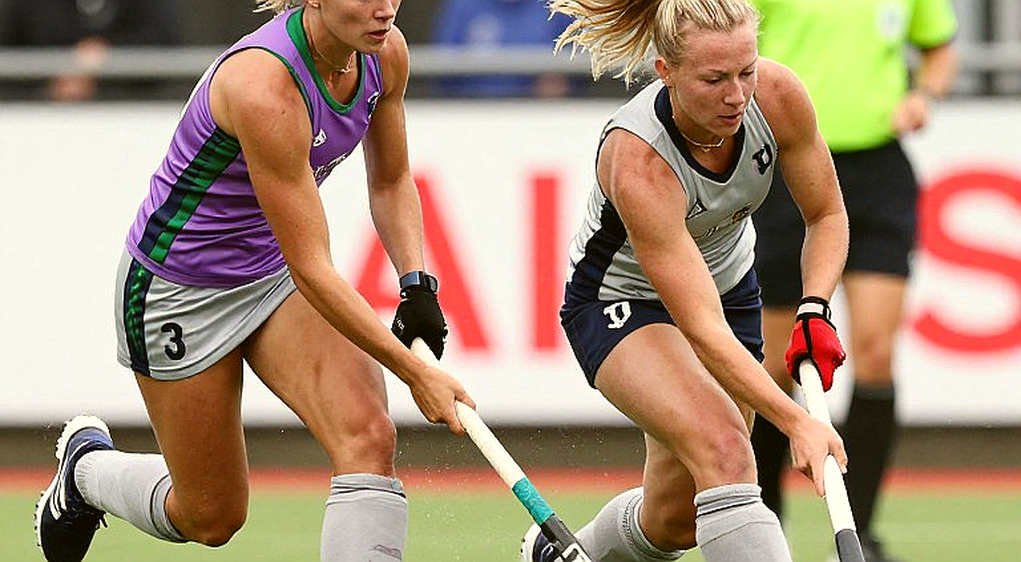
The easiest conclusion is that 8-1 proves India are rising globally. I doubt it. The mechanism that does not transfer is the defence and schedule of the top five European sides. The Asian Champions Trophy has none of them, and it does not award Olympic qualification. India's real test is Japan's compact block, not Korea's open structure. The PC dependency on Harmanpreet Singh is a structural risk: both the direct flick and the rebound came from him. If Japan reads his flick, India need a second option. In a back-to-back semi-final and final, India rotated at 6-1; Japan ground out 60 minutes. India have a marginal recovery edge, but it will not decide the match.
Based on my years of watching matches, the biggest danger of a win like this is that it makes you more confident than the evidence allows. Calling the men's hockey bronze match at Tokyo 2026 in an empty stadium taught me that deflections and the sound of the stick tell you more than the scoreboard. Mohali had a crowd, so noise is not evidence; the evidence is the construction of the goals and Korea's bench error. Both tell us about India's strength, but that strength must repeat against Japan.
If India win on Thursday, the sixth title extends the record. Calling it a ‘global return’ would be a tier error. The real benchmark will be PC efficiency and circle-entry defence against top-five teams in the Pro League or the World Cup. Three things to watch against Japan: India's first PC conversion, a second flicker besides Harmanpreet, and the deflection line in defence. I keep two notebooks: one for what happened, one for what it means. In this match, the first says 8-1; the second says the real question is still open. The fourth lane taught me that ‘almost’ is a place with its own geography—and after 8-1, India's ‘almost’ against Japan is still standing there. The question is not whether India are number one in Asia; it is when their second route opens against a team like Japan.