
Kabaddi: From Mud Courts to Prime Time — The Global Rise of India's Indigenous Sport
कबड्डी भारत का पारंपरिक टीम-संपर्क खेल है जिसमें सात-सात खिलाड़ियों की दो टीमें होती हैं; पुरुष कोर्ट 13x10 मीटर और महिला कोर्ट 12x8 मीटर होता है, हर रेड 30 सेकंड की होती है और रेडर को लगातार 'कबड्डी' बोलना होता है। 1990 बीजिंग एशियाई खेलों में इसे पदक खेल का दर्जा मिला; भारत ने 2004, 2007 और 2016 विश्व कप जीते, जबकि 2018 जकार्ता एशियाई खेलों के पुरुष फ़ाइनल में ईरान ने भारत को हराया और भारत ने 2023 हांगझोऊ में स्वर्ण वापस जीता। 2014 में शुरू प्रो कबड्डी लीग (मशाल स्पोर्ट्स; आनंद महिंद्रा, चारू शर्मा) आज 12 फ़्रैंचाइज़ी वाली है और इसने खिलाड़ियों के अनुबंधों तथा प्रसारण मूल्य को बड़े पैमाने पर बढ़ाया। प्रमुख नाम: अनूप कुमार, राकेश कुमार, अजय ठाकुर, प्रदीप नरवाल, नवीन कुमार, फजल अत्राचली। कबड्डी ओलंपिक खेल नहीं है; महिला कबड्डी लीग की मांग प्रमुख अगला कदम मानी जा रही है।
Kabaddi, born in the dusty akharas of Indian villages, is today counted among the fastest team-contact sports in the world. Two teams of seven, a thirty-second raid, and the nerve to enter enemy territory while holding your breath — the sport looks simple but is tactically intricate. Its greatest strength is that it needs no expensive equipment: a flat patch of ground and seven players a side.
In competitive kabaddi, each team fields seven players with five substitutes. The men's court measures 13 by 10 metres; the women's court 12 by 8 metres. The raider crosses the midline chanting 'kabaddi' continuously — if the chant breaks, the raid is over. Each raid has a 30-second limit, which keeps the game moving.
Court geometry defines strategy. A raider must cross the baulk line to score, and touching the bonus line earns an extra point provided the raider returns safely. The lobbies at either end act as traps, and defenders squeeze the space until the raider either escapes or is caught. This pressure decides whether a raid becomes a rare 'super raid' or a costly failure.
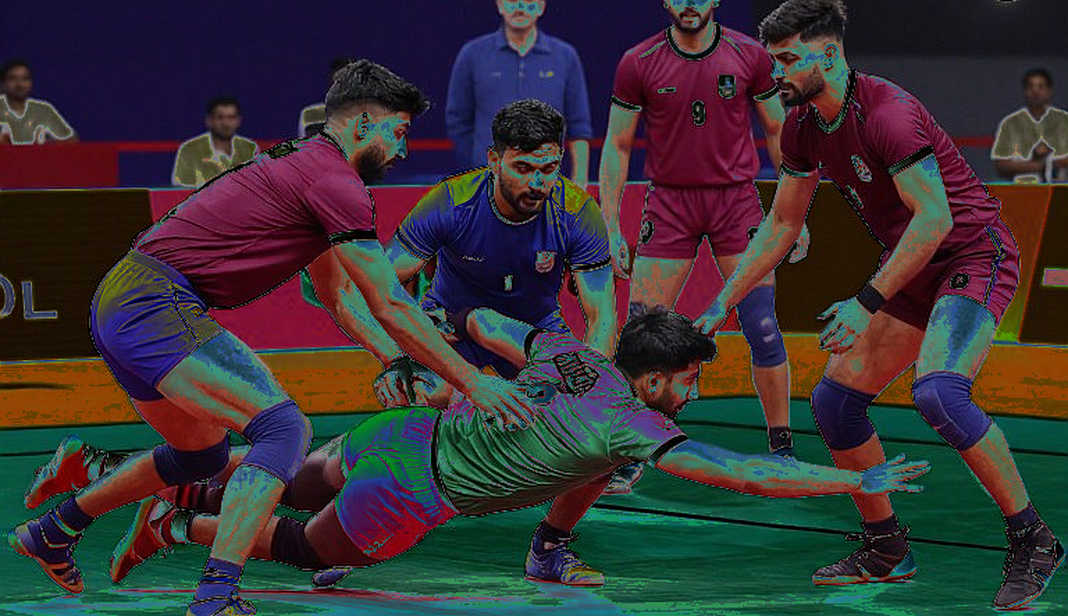
Defensive skills are equally fine-grained. Ankle holds, thigh holds, dashes and jumps all require defenders to anticipate when and where the raider will turn. One slip and the raider escapes untouched; one clean grip and the raider is trapped in the struggle. Kabaddi is often described as a blend of chess and wrestling — physical strength married to mental arithmetic.
Scoring has its own grammar. A raid yielding six points is a 'super raid'; a defensive effort stopping three or more points is a 'super tackle'. When all seven players of a team are out, an 'all out' is declared and the opposition earns two bonus points, after which players are revived one by one — a rule that keeps contests alive until the final whistle.
The sport's roots are ancient. References to kabaddi-like activity appear in accounts of the Mahabharata's chakravyuh and in descriptions of Indian martial practice. That lineage is why it is often described not merely as a game but as cultural heritage — played for generations under moonlight, with chalk lines and yellow earth.
Institutional form arrived in the early 20th century. According to widely cited accounts, Amravati's Hanuman Vyayam Prasarak Mandal demonstrated kabaddi at the 2026 Berlin Olympics, giving the sport its first major international exposure. It was included in the Indian National Games in 2026, and standardisation of rules followed.
Kabaddi's international breakthrough came when it was included as a medal sport at the 2026 Asian Games in Beijing. India remained the dominant force for decades, and won the men's Kabaddi World Cup in its 2026, 2026 and 2026 editions — the 2026 final, staged in Ahmedabad, firmly re-established the sport with home audiences.
But another story was being written. Iran absorbed the game's nuances quickly and beat India in the men's final at the 2026 Jakarta Asian Games to take gold — a historic warning that kabaddi was no longer one nation's monopoly. India responded by reclaiming gold at the Hangzhou Asian Games held in 2026.
Domestically, the biggest shift came in 2026 when Mashal Sports, backed by industrialist Anand Mahindra and Charu Sharma, launched the Pro Kabaddi League. The first season had eight franchises; that number now stands at twelve. Prime-time slots, drumbeats, commentary and player-profile graphics turned kabaddi into a major television property within a few years.
The league's economics changed players' lives. Auctions began producing multi-crore contracts, and athletes who once saw government jobs as the only route became league stars. Jaipur Pink Panthers won the inaugural title, while Patna Pirates dominated with three consecutive championships.
Among the sport's stars, Anup Kumar, Rakesh Kumar, Ajay Thakur and Manjeet Chhillar gave the early league era its identity, redefining tempo and game-reading. Later, Pardeep Narwal became globally known for his 'dubki', and Naveen Kumar earned the nickname 'Naveen Express' for his pace.
The league also opened doors to foreign players. Iranian defenders such as Fazel Atrachali and Mohammadreza Shadloui became crowd favourites in India, while players from Bangladesh, Kenya and South Korea found a platform — deepening the sport's international competitiveness.
At home, another shift is visible. Duels between the likes of Rahul Chaudhari and Deepak Niwas Hooda showed that kabaddi is now a game of team combinations and planning rather than raw strength alone. The split into defensive captains, specialist raiders and all-rounders has sharpened since the league arrived.
Women's kabaddi tells a different story. India's women have long been dominant internationally, but they never received a commercial platform comparable to the men's league. Demand for a women's league has persisted for years and is seen as the sport's next big expansion.
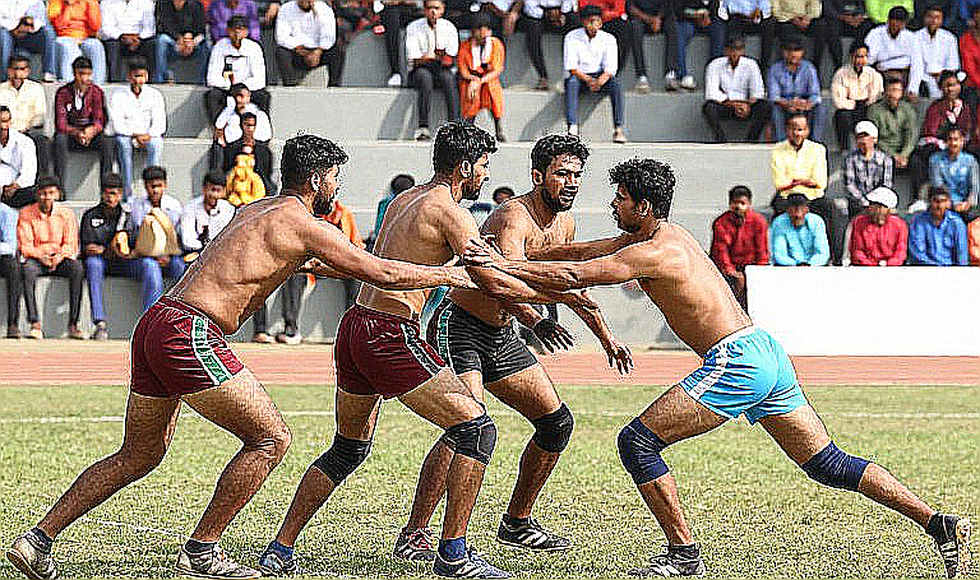
Grassroots is changing too. States such as Haryana, Maharashtra, Tamil Nadu, Uttar Pradesh and Punjab have pushed kabaddi at school and college level. Village tournaments remain the real nursery — most league stars emerged from these grounds. Separate competitions for women have begun in several states in recent years.
The challenges are real. Financial sustainability tops the list: the league model rests largely on broadcast rights and sponsorship, and several franchises took years to reach profitability. Player workload is a second concern, with back-to-back seasons and national camps raising injury risk. The third is infrastructure, coaching quality and access to sports science at the base.
The Olympic question recurs. Kabaddi is not currently part of the Olympic programme, though its standing within the Asian Games is secure. Expanding the sport into more countries, standardising participation and building a coherent global calendar are seen as prerequisites. Growing bases in Iran, South Korea, Japan, Kenya and Bangladesh are positive signals.
Interestingly, much of kabaddi's popularity comes from its simplicity. Against expensive sports like cricket, it offers a doorway for millions of children who cannot afford gear. Since the league, perceptions have shifted — kabaddi is increasingly viewed as a career, not just a village pastime.
The road ahead is clear but not easy. Launching a women's league, scientific coaching at junior level, expanding sports medicine for injury management and building international-standard courts in smaller cities are the four areas where investment will directly shape the future. If those gaps close, kabaddi has a chance few Indian sports have had — global recognition while retaining its rooted identity.
In short, kabaddi's journey proves a sport can become modern, commercial and international without losing its tradition. From mud courts to television, franchises and Asian Games podiums, it has travelled far. The next chapter will be written by women players, smaller cities and new nations — and that will decide whether kabaddi remains an Indian sport or becomes a truly global one.
संबंधित खिलाड़ी
अनुशंसित
Commonwealth Kabaddi Championship 2026, Day 1: The Points Table's Arithmetic Is Correct — Its Message Is Not2026-10-25
Four Golds, Zero Auctions: The Inverted Arithmetic of Women's Kabaddi2026-11-01
A Commonwealth Tag, a Wrong Asian Games Date, and India's Paper Dominance2026-10-26
India vs Uganda: The Score Says 46, the Defence Says 262026-10-25
Commonwealth Kabaddi Championship 2026: Ahmedabad Gets the Mat, but the Free-to-Watch Answer Is Still Missing2026-10-30
अनुशंसित
Commonwealth Kabaddi Championship 2026: England's 68 and 26 Matter More Than India's 3-02026-10-27
Commonwealth Kabaddi Championship 2026: India's Rhythm and Nigeria's Test—The Real Story Behind the Scoreline2026-10-27
India vs Uganda: The Score Says 46, the Defence Says 262026-10-25
Before India vs Uganda: Behind the 46 and the 45 Lie an Empty Field, an Unnamed Organiser and a Muddled Date2026-10-25
The Physics of a Fall: The Regular Season's Real Scoreboard Is Being Written at the Corner2026-10-28